

As the latest actual-play series campaign builds steam, leading up to the concluding part of its introductory phase and dividing the players into three separate groups, audiences are still discovering more about the mysterious world of Aramán, crafted by game master Brennan Lee Mulligan. The previous setting, the world of earlier campaigns, drew extensively from established D&D mythology. In contrast, one of the most thrilling aspects of this new season is how Mulligan reinterprets those familiar references to create something distinctly unique.
A Fresh Perspective on Celestials and Demons
Fans have already encountered Aramán’s melancholy and warped version of the heavenly beings, but the third installment, titled “The Snipping of Shears,” also delivers some background about their demonic opposites, the infernal creatures. This term has been used quite generically in the current season, but what’s most interesting is that it also refers to individuals that would be categorized as “tieflings” in traditional Dungeons & Dragons worlds, including the fiendish spellcaster Tyranny, played by Whitney Moore.
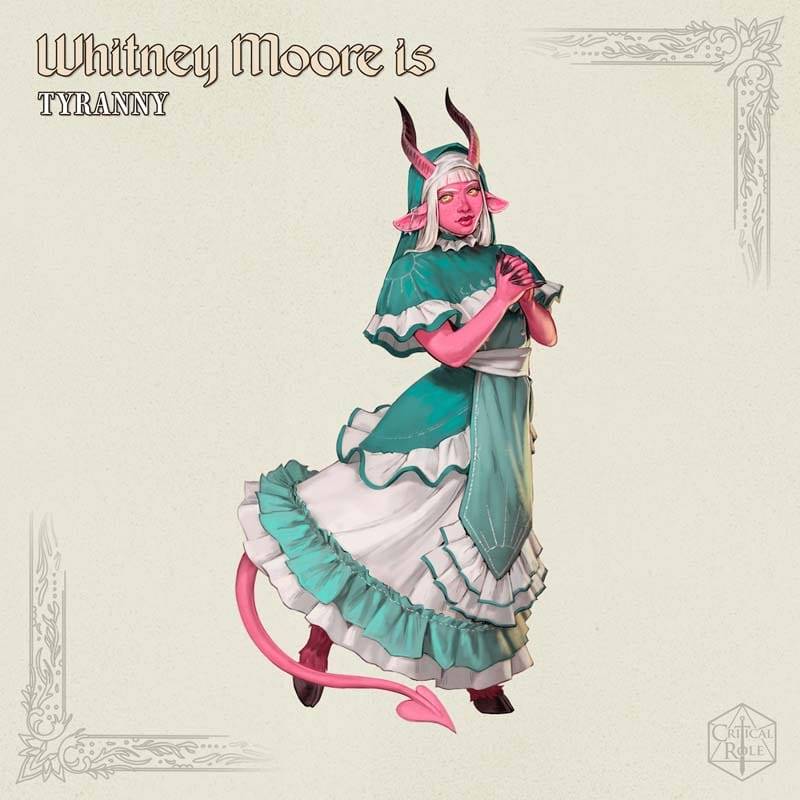
Traditionally, tieflings are humanoids with infernal heritage, but it appears that in Aramán, they’re true demons whose souls have come to inhabit a physical form as the result of a pact. In episode 3, we learned that these entities dwell in a place called the Pit, ruled by an ominous being called High Prince Ksha'aravi. This powerful figure made an agreement with House Halovar, in which he would supply them infernal agents to use as agents and as examples of salvation for the a religious order. As payment, he would get human spirits and some of the Filament, a substance with divine properties created by the the family.
Understanding the New Lore
If you find all this puzzling, many share your confusion. The Dungeon Master is a expert at hinting, and he’s being meticulous about how much he reveals in every installment. Still, we can assume from what has been shown that Aramán’s tieflings are infernal spirits who inhabit a mortal body. This is an interesting twist on one well-loved fantasy race, and one with the potential to make it more engaging.
The Origins of Tieflings
The beginning of this race dates back to 1994 and the iconic Planescape Campaign Setting for second edition AD&D. They were loosely defined as humans with extraplanar ancestry, suggesting it originated from infernal beings, demons, or other malevolent entities. Planescape author Zeb Cook revealed in a later interview that he left the tieflings' origins vague on purposefully because he simply wanted to create an character type for a reformed devil/antihero character, in part to appeal to the dark and emotional subcultures. Later versions of D&D, however, further defined and narrowed down those backgrounds (a choice that the creator disapproved of), leading to the widely accepted view that tieflings all have lineage that traces back to the infernal dimensions.

Although the specifics about that heritage vary greatly, the common point is that tieflings are humans with the infernal lineage running through their veins. In D&D, infernal creatures are the inhabitants of the Lower Planes of malevolent nature, such as the Abyss, the the infernal realm, the prison plane, the fiery pit, Pandemonium, and likely others that are often overlooked. This universe structure is common to almost all D&D settings, even the world of Exandria, which has had its fair share of Fiend appearances. While these evil creatures are native to the infernal realms, they can be summoned to the mortal world or enter it through portals. They arrive with their corporeal forms, but they can only be truly slain on their native planes.
Breaking with Convention
The description of the Pit and its inhabitants presented in episode 3 of this season deviates from these common elements. Ksha'aravi strongly resembles the archdevil, the ruler of the Nine Hells, with all that plotting and spirit trading, but my impression is that the demons of Aramán lack a true physical body, or at least one they can use to enter the “Material Plane” (or whatever its name is in the world). The warlock character specifically says in episode 3 that she was “given a body” just six months ago, and before that she was just a “drifting spirit” in the Pit, so this appears to be the beginnings of tieflings in Aramán (future episodes may reveal traditional tieflings do appear, but given that this character is a main cast member, this is improbable).
The Creator’s Intent
Going back to Zeb Cook’s interview, he explained that he designed the race to play a specific role: the afflicted, partially fallen hero/heroine, that didn’t exist in D&D's epic fantasy-focused roster of options at the period. Planescape co-author Colin McComb said in the same interview that "Tieflings resonate because they're brooding and intense. They've got an automatic built-in secret. They're misfits and isolates, and they have a good reason to avoid communities (and be rejected by them).” With time, however, the darkness that was integral to the background of this race faded away, and they simply became a highly favored character option with additional magical abilities and a cool, different look.
Embracing the Darkness
This is perfectly fine. You can play a happy-go-lucky tiefling who doesn’t think for a second about their fiendish bloodline, if that suits your style. Nevertheless, it’s believed that Brennan Lee Mulligan’s version shines exactly because it emphasizes that “dark” beginning, turning it into a core aspect of the persona. By all intents and purposes, these demonic characters have a body only because of Ksha'aravi’s dealings with the the noble house. When she has the expected liberation storyline, freeing herself from the chains of her infernal kin, it will seem impactful and intense because her character species’ origin is baked into the world’s mythology.
Looking Ahead
In addition to this fresh perspective at tieflings, many are eager to discover additional details the infernal realm and Aramán demons. Fans are enthusiasts for the game’s universe structure, especially the lore of the Lower Planes. I could read about strife in the Nine Hells, fights among fiendish rulers, and the mysterious origins of the neutral fiends all day. Yet, this lore is fairly uniform in most fantasy worlds, so I’m looking forward to some new, meaningful addition to it.


